
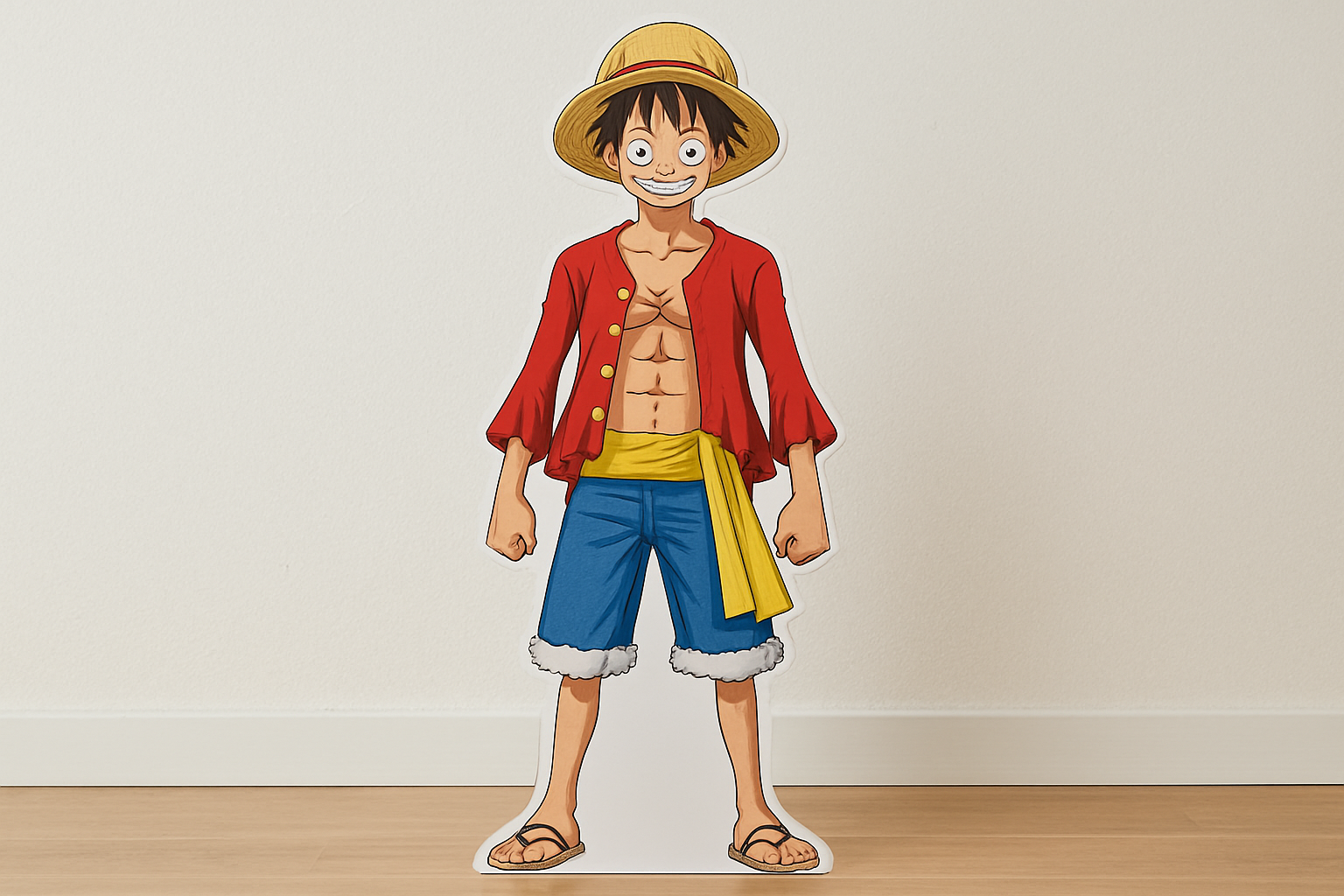
Luffy, the ambitious pirate captain of the straw-hat crew, is as much about his appetite and his bountiful resilience as he is about his distinctive silhouette. When fans discuss “how tall is Luffy,” they’re not just quoting a number; they’re grappling with a moving target that shifts with the story’s timeline, the various forms he takes in combat, and the playful exaggerations that define One Piece’s visual language. This article delves into how height is presented in the series, what factors can influence Luffy’s stature on the page, and how fans interpret these changes in context.
We’ll explore what official material and in-universe cues suggest about Luffy’s height, how different arcs and art styles influence perception, and why the question matters to fans who enjoy comparing characters, planning cosplay, or simply understanding the world better. By the end, you’ll have a clearer sense of why a single figure isn’t enough to pin Luffy down, and how height interacts with identity in One Piece.
How height is portrayed in One Piece and why it matters
In One Piece, physical proportions are a storytelling tool as much as their personalities are. Creator Eiichiro Oda uses exaggeration, foreshortening, and dynamic action poses to convey power, energy, and mood. Height, while a straightforward attribute, serves multiple purposes in the narrative: it helps establish seniority or leadership, marks growth across a long voyage, and reinforces the playful contrast between different character archetypes in the crew and their allies.
For readers, height becomes a quick visual shorthand. In the early parts of the journey, Luffy’s silhouette is compact and nimble, underscoring his relentless drive and unguarded confidence. As the crew travels, some of their battles and transformations introduce momentary changes in appearance—whether through gear techniques, enhanced postures, or action-driven angles in panels—that can momentarily shift perceived height. Taken together, these moments illustrate a core principle of the series: physical scale remains important, but it is inseparable from the story’s momentum and humor.
What counts as Luffy’s canonical height and how it’s measured
Officially, the manga and related materials provide a range rather than a single fixed number. This reflects both in-universe growth and the visual liberties that come with a long-running series. For fans who want to pin a figure, the most consistent approach is to acknowledge a baseline height that appears across different, relatively stable moments in the story, while also recognizing that specific scenes—particularly when Luffy is using a gear or transforming—can visually alter perceived height in the moment.
In practice, readers commonly encounter two realities: Luffy’s height during calmer, standard states tends to read differently from his height when he’s powering up or adopting a specialized form. Even when a precise centimeter or inch isn’t stated in the dialogue or captions, the wider consensus is that his stature sits within a humanly plausible range for a character of his build and role. What matters more than a single figure is how his height interacts with how his character is framed in a given moment—whether he is presenting authority, readiness for a challenge, or lighthearted bravado.
Factors that can influence how tall Luffy appears on the page
Posture and stance
Stance plays a major role in how tall a character feels. Luffy’s posture when entering a confrontation—shoulders set, chest forward, feet planted—can push the perception of height upward. Conversely, a hunched or relaxed pose can make him appear shorter. Oda leverages these shifts to convey immediacy and emotion in combat or dialogue, which means the same character can read as slightly taller or shorter depending on the moment’s urgency.
Gear abilities and transformations
As Luffy activates various signature powers, his silhouette often changes in ways that influence perceived height. Each form carries its own visual grammar: some emphasize elongated limbs or broader torsos, while others compress the frame to highlight speed or ferocity. These transformations are less about a constant measure and more about signaling capability and anime-style flair, which is a deliberate storytelling choice in One Piece.
Panel composition and art style shifts
Across arcs and chapters, the art occasionally shifts in tone or technique—sometimes to accommodate more action, other times to emphasize a dramatic moment. When the frame tightens around Luffy during a key beat, his height can read differently than in wide, panoramic scenes. Fans who track height across the series should expect small, purposeful variance tied to the narrative and the panel’s layout rather than a strict, unchanging metric.
Character interactions and perspective
Height perception is also relational. When Luffy stands beside taller allies or in the foreground against a towering backdrop, he may seem shorter or taller by comparison. This relative sense of scale is a long-running device in manga and anime, relying on visual cues rather than an exact measurement to communicate dynamics within the crew and their opponents.
How Luffy’s height compares to other major characters
One Piece thrives on a diverse cast with varied physiques, and height differences among the crew—not to mention their adversaries—are part of the world-building. Luffy’s frame sits in a practical, athletic range suitable for a pirate who relies on mobility and gut instinct. When placed alongside crewmates like swordsmen, navigators, and doctors, or against towering antagonists, his relative size helps communicate balance in combat styles and leadership roles.
That said, fans often pay closer attention to growth narratives than to a fixed stat. As the story progresses, some characters experience notable changes in strength, technique, and presence. Luffy’s height, in this context, becomes a companion marker to his evolving capabilities and his role within the ensemble rather than a solitary data point to memorize.
Height and identity: what it adds to Luffy as a character
Height, in this universe, works in concert with personality. Luffy’s compact, resilient silhouette reinforces his core traits: audacity, perseverance, and an unshakable sense of purpose. His physicality supports the idea that size is not the sole determinant of strength or influence. The character’s reach is defined as much by tenacity, timing, and strategic instincts as by any single inch on the measuring tape.
Moreover, the way height is treated in scenes of camaraderie—between Luffy and his crew, allies, or rivals—helps underline themes of trust, unity, and diversity of form. The series repeatedly demonstrates that leadership and impact come from more than height alone, a message that resonates with readers who value character depth over mere scale.
Cosplay, merchandising, and fan discussions: how to approach Luffy’s height
For fans who enjoy cosplay or collecting, the practical takeaway is to aim for a silhouette that captures the character’s essence rather than chasing a precise measurement. Luffy’s iconic elements—his straw hat, his scar, his carefree expression, and his typical outfit—contribute far more to recognizability than a straight numerical height. When cosplaying, prioritize pose, garment details, and the energy of the character. Height can be adjusted through lens choice, camera angles, and posture, allowing a faithful rendition without getting hung up on an exact figure.
Online discussions about Luffy’s height often reflect a broader fan culture that enjoys debating canon vs. interpretation. Embrace the nuance: the same character can read as slightly taller in one scene and a bit shorter in another, without any contradiction to the story’s logic. This fluidity is part of what makes One Piece a long-running phenomenon: it invites ongoing interpretation while maintaining a coherent sense of character identity.
Top 20 Best Dragon Ball Quotes offers a broader look at iconic lines that shape heroic moments, which complements curiosity about Luffy’s stature with a deeper sense of how legendary anime dialogue reinforces character presence.
Conclusion: height as a dynamic, narrative element
Rather than a fixed statistic, Luffy’s height functions as a dynamic facet of his overall portrayal. It interacts with his poses, powers, and relationships to convey leadership, momentum, and vitality. By understanding the factors that influence how tall he appears on the page, readers gain a richer sense of how One Piece uses visual storytelling to craft a living, breathing world. In the end, the exact measurement matters less than how height contributes to the character’s presence, growth, and the enduring appeal of his adventures.